
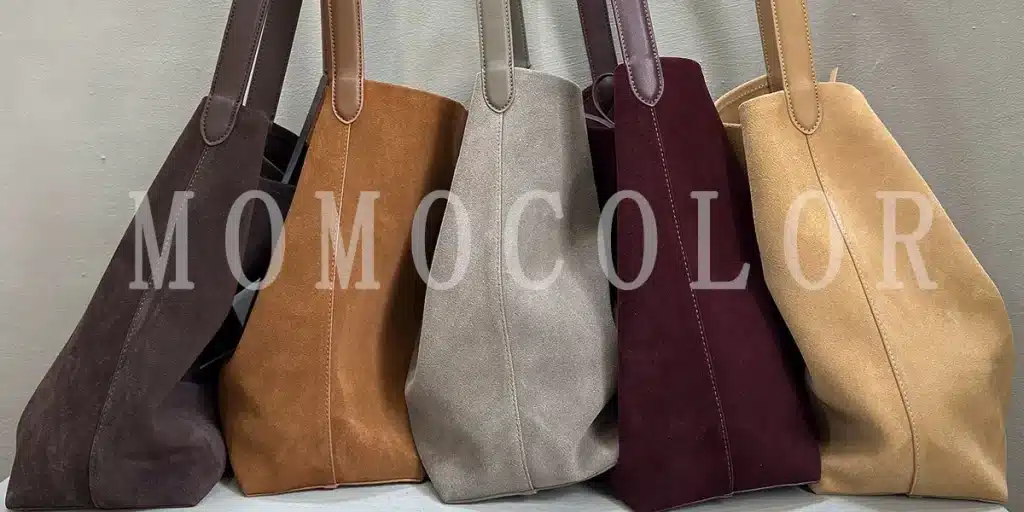
Every season, brands ask the same question: what silhouette will the market actually pay for? For the past several years, the answer has been some variation of structured—boxy totes, rigid satchels, architectural crossbodies with clean edges and defined corners. That era is not over, but it is being rebalanced. The 2027 development cycle tells a different story. Soft bags are moving from trend-adjacent experimentation into core collection planning, and the materials leading that shift—suede and nappa leather—are forcing factories, brands, and buyers to rethink how bags are designed, sourced, and produced.
This is not about runway aesthetics. It is about what happens inside a tech pack, a cutting room, and a QC inspection when a bag no longer relies on stiff interfacing, heavy board reinforcements, or structured base panels to hold its shape. For a custom handbag manufacturer or OEM handbag manufacturer working with fashion brands on private label collections, the soft bag shift is both an opportunity and a genuine production challenge. The brands that understand the manufacturing implications early will be the ones that execute well—not just in design, but in margin, quality, and lead time.
The following analysis breaks down why suede and nappa are becoming material priorities for 2027 collections, how soft construction changes product development workflows, and what sourcing managers and product developers need to know before committing samples to a soft-structured direction.
Why Soft Bags Are Gaining Momentum
Consumer behavior is driving this more than anything else. The buyer who purchased a structured top-handle bag three years ago for a return-to-office wardrobe is now carrying that same bag less often. Post-pandemic lifestyle patterns have settled into something more fluid—remote work, hybrid schedules, travel that mixes leisure with business, and a general unwillingness to carry anything that feels like effort.
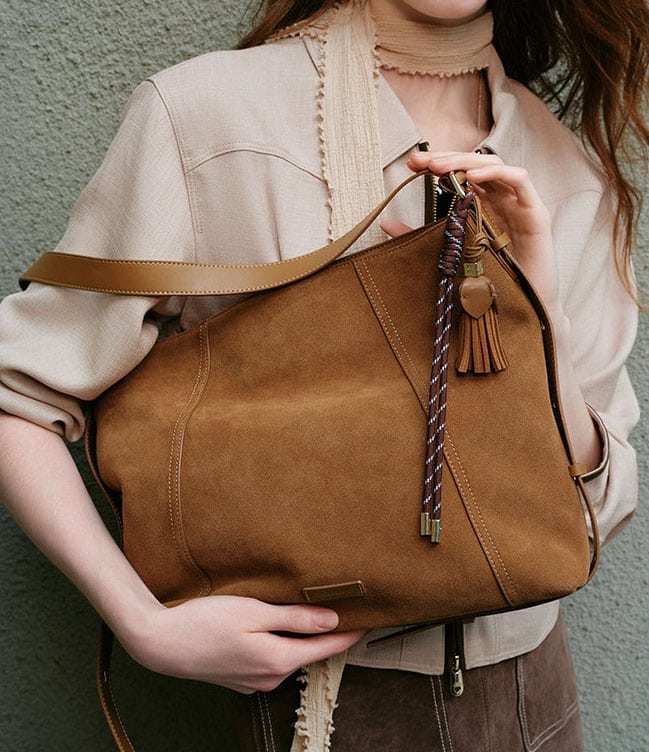
Soft bags address that directly. They collapse against the body, weigh less, and adapt to what the user actually carries rather than dictating a precise load. A shopper in a contemporary price band might love the look of a structured crossbody but will purchase the softer alternative because it wears comfortably across a coat, packs flat in a carry-on, and transitions from a morning market run to an evening dinner without looking over-deliberate.
Beyond function, there is a quiet luxury logic at work. A rigid bag with heavy hardware announces itself. A slouchy nappa tote or an unlined suede hobo conveys confidence without the same level of visual noise. That aligns with where luxury and premium contemporary markets have been moving for several seasons: materials first, logos second, structure when necessary but not as a default. Brands positioning in the $400–$1,200 retail range have been particularly quick to respond. A soft bag in a high-grade suede or full-grain nappa signals material value without needing a logo plate the size of a belt buckle.
From a product development standpoint, the demand shift is measurable. We see more RFQs specifying “slouchy silhouette,” “soft drape,” “no stiffener,” and “unstructured body” than we did two years ago. Buyers and importers are asking for suede handbags and nappa leather handbags not as seasonal experiments but as carry-over styles planned across multiple drops. That tells us the market is placing soft bags in the continuity range, not the test-and-react range.
The Rise of Suede in Contemporary Handbag Collections
Suede used to carry a reputation as a high-maintenance outlier—beautiful but fragile, reserved for autumn deliveries and kept far from anything that might see daily use. That reputation has eroded, and not just because of changing taste. Improvements in tannery finishing, stain-resistant treatments, and cleaner cutting techniques have made suede far more viable for everyday soft handbags.
Visually, suede delivers depth that smooth leather cannot replicate. Light hits it differently. Color saturation on a well-finished calf suede reads as richer and more complex than the same dye on a coated surface. Brands are using that to their advantage, running suede across soft hobos, oversized slouchy totes, and relaxed drawstring shapes where the material itself becomes the primary design element. When a bag has no architecture, the leather has to do the work. Suede does that.
The luxury perception is also real. A soft suede bag with minimal branding suggests a certain level of taste—one that many contemporary and DTC brands are leveraging to compete against more established luxury houses. A direct-to-consumer brand selling at $350 can create a product that feels closer to a $900 designer piece simply by selecting the right suede quality and silhouette. That kind of perceptual value is hard to achieve with smooth coated leathers at the same price.
From a manufacturing perspective, suede introduces specific production considerations. Cutting yield on suede is generally lower than on smooth grain leather, partly because nap direction must be consistent across panels and partly because natural hide markings that might be buffed or corrected on a top-grain article are still visible on the suede split. We consistently advise brands to factor in an additional 8–12% material waste compared to standard leather when costing suede bags. If your target FOB doesn’t accommodate that, you either need to adjust your retail price or reconsider your material choice.
Suede quality also varies enormously between suppliers. A low-cost suede from a volume tannery might feel acceptable at the sample stage but will show wear quickly—balding at friction points, color transfer onto clothing, and poor recovery from scuffing. We source suede only from tanneries that provide full test reports for colorfastness, crocking, and tear strength. For brands developing suede handbags with the intent to sell at a premium, those reports matter. Buyers will return product that stains a white blouse on first use.
Why Nappa Leather Continues to Dominate Premium Collections
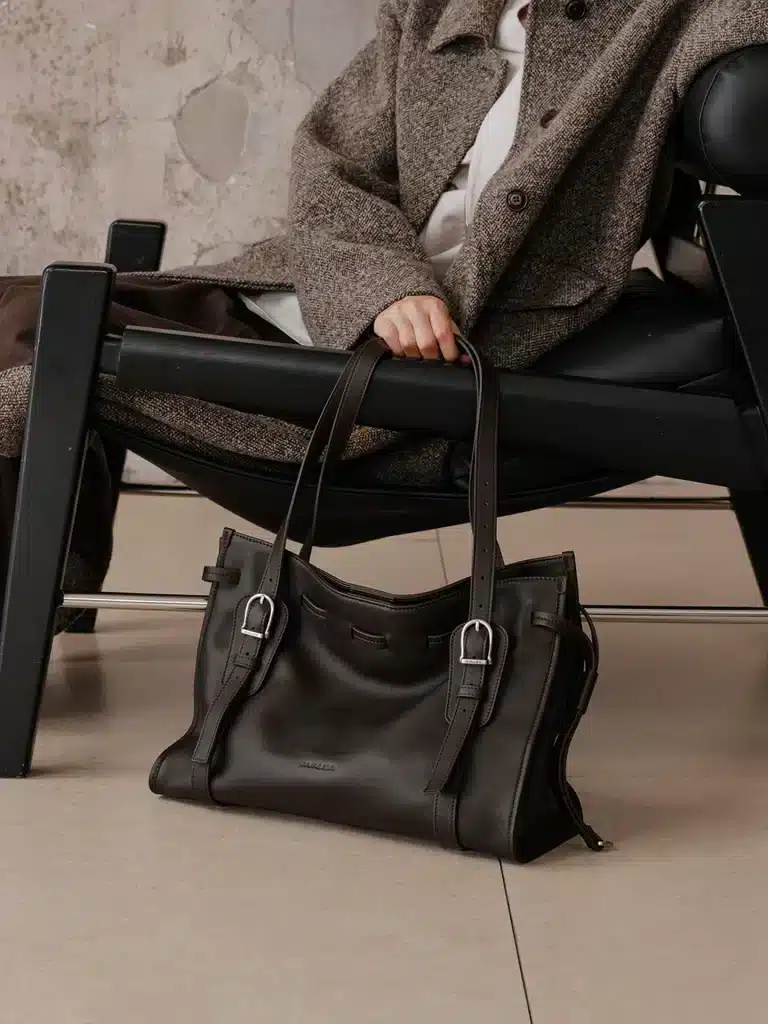
Nappa leather has been a mainstay in luxury handbag manufacturing for decades, and the soft bag trend only strengthens its position. The defining characteristic of nappa is its hand feel—soft, supple, and almost textile-like in drape. That is exactly what a soft bag requires. You cannot fake nappa’s touch with a corrected grain leather and a heavy softener coating. The raw material quality has to be there from the start.
What makes nappa commercially compelling for a luxury handbag manufacturer or any brand targeting the upper premium segment is its combination of softness and durability. Unlike lambskin, which reads as luxuriously soft but can abrade or scratch with regular use, a high-grade full-grain nappa (typically from calf or young cowhide) holds up under daily wear while maintaining a refined hand. That balance appeals to buyers who are spending $800 or more and expect the bag to outlast the season.
Construction advantages also come into play. Nappa cuts cleanly, skives well, and accepts edge paint or folded-edge finishing more predictably than some softer chrome-tanned articles that can stretch during processing. For a soft bag with minimal internal reinforcement, the leather itself needs to provide enough body to prevent the silhouette from collapsing entirely. A well-selected nappa gives that—structure without stiffness, movement without shapelessness. Our sampling team often describes it as “memory leather” because it moves with use but returns to something close to its intended form.
Brands developing nappa leather handbags should ask their OEM or ODM handbag manufacturer about the specific tannery source, finish type, and whether the leather is semi-aniline, aniline, or pigmented. Aniline nappa will show natural grain characteristics and patina over time, which is desirable for certain luxury positions but may generate returns if customers perceive natural markings as defects. Semi-aniline offers a middle path—more consistency with some visible grain. Pigmented nappa provides uniformity but can sacrifice some of the hand feel that makes nappa desirable in the first place. These are sourcing conversations we have almost daily with brands during the development stage.
How Soft Construction Changes Product Development
A structured bag relies on a framework: stiffeners, interlinings, board base panels, edge piping, and hardware that mounts to reinforced surfaces. A soft bag removes most of that framework. While that may sound like simplification, it often increases the development burden because every component that remains must work harder.
Pattern making shifts significantly. With a structured body, a 2D pattern piece produces a predictable 3D result because the material’s rigidity enforces the geometry. Soft leathers drape, fold, and stretch. The same pattern cut in a rigid saffiano and a pliable nappa will yield two completely different silhouettes. Our pattern team typically builds soft bag prototypes using the actual production leather—not a substitute—because the drape behavior cannot be extrapolated from a stiff mock-up material. Brands that skip this step and sample in a lower-cost approximation often reject the first prototype and lose weeks in the calendar.
Reinforcement requirements become a strategic decision rather than a default. Even a bag marketed as “unstructured” usually needs hidden support at key points: a base panel that maintains some footprint without creating visible corners, a top edge that holds its line without rolling, a handle attachment area that distributes load without pulling the leather out of shape. We use lightweight micro-fiber reinforcements, ultra-thin EVA inserts, and sometimes a partial cotton interlining that adds subtle body without compromising the soft hand. These interventions are invisible to the customer but critical for shape retention over the product’s lifespan.
Lining selection also changes. In a structured bag, the lining is secondary—the bag holds its shape regardless. In a soft bag, the lining can pull, twist, or restrict the outer material’s movement. We typically spec a slightly oversized lining in a lightweight, flexible fabric—microsuede, fine cotton twill, or a thin polyester satin—and attach it with enough give that the outer leather remains free to drape naturally. A tight lining in a soft slouchy hobo will ruin the silhouette immediately.
Hardware decisions carry more weight—literally. A heavy chain strap or an oversized buckle on a soft nappa bag will pull the leather downward, creating stress points and distorting the intended shape. We often guide brands toward lightweight hardware alloys, smaller gauge chain, or magnetic closures that function without requiring a rigid frame. The difference between a 150g shoulder chain and a 90g version can be the difference between a bag that drapes beautifully and one that looks perpetually off-balance.
Manufacturing Challenges Behind Soft-Structured Bags
Soft bags do not automatically equal simpler production. In some respects, they demand tighter process control than structured equivalents. The primary challenge is shape consistency. With a structured bag, the frame and reinforcements act as a production jig—the assembly follows a predictable path and QC inspectors have clear dimensional tolerances. A soft bag measured on a flat table will never look the same as one hanging from a mannequin hook. Defining and communicating “acceptable silhouette” to a production line requires clear photo standards, hanging measurement protocols, and often a reference sample that line supervisors can physically compare against.
Material stretching is a persistent issue. Soft leathers, especially nappa and suede, can elongate during stitching if feed tension is not carefully managed. A panel that stretches just 3mm during assembly may not seem significant, but across six panels, the accumulated deviation can shift the bag’s proportions visibly. Skilled operators and proper presser foot pressure adjustments are not optional here—they are the difference between a first-quality piece and a second.
Edge finishing presents its own complications. Structured bags often use edge paint or bound piping, which are forgiving on straight, rigid edges. Soft bags with rolled seams, raw-edge styling, or turned-out constructions require finishing methods that move with the leather. We frequently use fine rolled-edge techniques, hand-burnished edges, or ultra-flexible water-based edge paints that won’t crack when the bag flexes. These methods add labor time. A soft bag that looks simple on paper can carry a higher minute count than a structured style, which surprises some brands during costing.
Quality control checkpoints also need adjustment. For structured bags, we inspect dimensional accuracy, stitch straightness, hardware alignment, and finish consistency. For soft bags, we add specific checks: drape when suspended by handle, shape recovery after being folded (simulating packing for shipping), and stress-point stretch under a loaded weight test. If a soft tote stretches 2cm at the handle attachment after holding 5kg for an hour, the reinforcement design needs revisiting—not at the sample stage, but before bulk production locks in.
Which Brands Can Benefit Most from the Soft Bag Trend?
The commercial opportunity spans multiple segments, but the execution strategy differs by business model.
Contemporary fashion brands in the $200–$600 retail range stand to gain significant margin advantage from soft bags. The material cost of a high-grade suede or nappa is higher than a standard PU or coated split, but the simplified construction often reduces labor hours relative to a fully structured frame bag. When the ratio of material premium to labor savings is calculated carefully, many styles come out with comparable FOB costs but significantly higher perceived value at retail.
Luxury brands working with an ODM handbag manufacturer on exclusive developments will find that soft bags allow for greater material storytelling. An aniline nappa sourced from a specific Italian tannery, a suede with a proprietary finishing technique—these become part of the product narrative. For the luxury customer, the “how” matters as much as the “what,” and soft bags put the material conversation front and center.
Direct-to-consumer brands have a particular advantage: photography. Soft bags photograph beautifully in lifestyle imagery, slouching naturally on a sofa or draping across a model. That visual ease translates into higher conversion on social media advertising compared to rigid bags that can look stiff or over-styled in the same settings. Several DTC brands we work with have shifted entire seasonal drops to soft silhouettes based purely on engagement metrics from their previous split tests.
Private label collections for multi-brand retailers need to consider floor display. A structured bag stands at attention on a shelf; a soft bag needs hanging display or a stuffed shelf presentation to communicate its shape. That is not a barrier—it is simply a detail that wholesale buyers should address with retail partners before shipping. A well-packed soft bag with internal tissue support will read correctly on the sales floor; one tossed flat into a shipment with no shaping will not.
How to Develop a Production-Ready Soft Bag Collection
Starting with material selection, the advice is simple but non-negotiable: test the actual production leather, not just a swatch, in a working prototype. A 5cm x 5cm swatch will never tell you how a full nappa panel drapes across a 40cm tote body. Order sample yardage, build a first prototype in the intended material, and evaluate drape, hand feel, and shape retention before locking your tech pack.
The tech pack for a soft bag needs to specify more than just dimensions and materials. It should include hanging photos showing the desired drape, notes on acceptable variation in slouch (measured from a fixed point), and clear callouts for any hidden reinforcement zones. Relying on a flat technical sketch alone will cause miscommunication between your design intent and the factory’s production interpretation. We ask brands to include a “shape standard” section in their tech packs for any unstructured style.
Sampling typically requires more iterations than a structured bag. Where a structured satchel might lock in at the second proto, a soft hobo or suede shoulder bag often needs three or even four rounds to dial in the exact slouch, the handle drop when loaded, and the visual proportions when worn. Brands should factor that into their development calendar. Rushing a soft bag through one proto and into production is a reliable path to bulk quality issues.
Prototype testing should include load testing, shape recovery after compression, colorfastness for suede, and handle attachment pull tests. A customer will pack that bag with a water bottle, wallet, keys, phone, and sometimes a small tablet. If the silhouette collapses completely or the handles show strain, the product has not passed real-world conditions. We conduct these tests in-house before a final sample leaves the factory, but brands should replicate them independently with their own user testing.
Cost considerations often revolve around the material-to-labor ratio mentioned earlier. Soft bags may save on certain structural components but can add cost in edge finishing, specialized sewing techniques, and higher defect rates if the leather grade is not tightly controlled. We recommend building a 10–15% contingency into initial FOB estimates for first-time soft bag developments until a brand has baseline data from at least one production run.
Potential Risks Brands Should Consider
No material shift is without pitfalls. Suede requires ongoing maintenance that some end consumers will not tolerate. A suede handbag returned because of water spotting or dye transfer is a cost the brand absorbs, not the factory. Brands should include care cards, dust bags, and possibly a protective spray recommendation in the packaging. Setting realistic customer expectations is part of product development.
Shape retention over time varies by leather quality and usage. A soft nappa bag that looks elegant when new may become a formless pouch after a year of heavy use if the leather lacks sufficient substance. Specifying a minimum thickness—typically 0.8mm to 1.2mm for nappa on soft bags, depending on panel size—helps mitigate this. Leather that is too thin will not recover; leather that is too thick loses the soft aesthetic. This is a specification conversation to have with your OEM handbag manufacturer at the material sourcing stage.
Shipping and packing soft bags present challenges that structured bags avoid entirely. A rigid bag can be wrapped in tissue and placed in a carton with predictable results. A soft suede tote packed flat will arrive with creases that may or may not resolve with steaming. We recommend shipping soft bags stuffed with acid-free tissue and shaped to their intended silhouette, even if that increases carton dimensions slightly. The alternative—arriving at a warehouse looking like crushed laundry—damages the unboxing experience and increases returns.
Production complexity also scales with volume. Producing 200 units of a soft slouchy style with tight QC is manageable. Producing 5,000 units across three colors while maintaining consistent silhouette standards requires a production line that has been trained on that specific style. Not every handbag supplier has the process discipline to deliver soft bags at scale. Brands vetting a new manufacturing partner should ask to see soft-structured styles currently in production and review QC documentation for those lines specifically, not just general factory capability statements.
How Experienced OEM/ODM Manufacturers Support Trend-Driven Product Development
A factory that merely executes a tech pack is not a development partner. When a brand comes to us with a soft bag concept—a loose reference image, a target retail price, a preferred material family—the real work begins well before the first cut. We review the design intent against our material library and suggest leather options that match the desired hand feel at the target FOB. We identify which parts of the silhouette require subtle reinforcement and which can remain truly unlined and free-moving. We flag hardware choices that will conflict with the soft structure and propose alternatives that preserve the aesthetic while preventing long-term quality issues.
That kind of iterative consultation is what separates a custom handbag manufacturer focused on partnership from a transactional supplier. During development, we often produce multiple material test panels in parallel—same bag design, two different suede qualities, or nappa from two tanneries—so the brand can evaluate the tactile and visual differences on a full product rather than a swatch card. This adds a week or two to the sampling timeline but saves far more time later by eliminating guesswork.
For brands developing private label collections on a seasonal calendar, having a manufacturer that understands soft bag construction means fewer sample rejections, more predictable production lead times, and a lower risk of quality disputes at final inspection. That is the practical value behind the word “experienced.” It means the factory has already solved the problems a brand is encountering for the first time.
If you are planning a soft bag collection for an upcoming drop and want to discuss material sourcing, silhouette development, or production feasibility, we can arrange a consultation with our product development team. Whether the direction is suede handbags, nappa leather handbags, or a mix of premium materials in relaxed constructions, the conversation starts with understanding your market positioning and retail targets. Reach out to our sales team with your brief or reference images, and we will prepare a preliminary material recommendation and feasibility assessment.
Final Thoughts
The soft bag trend is not a seasonal whim. It reflects deeper changes in how consumers use bags and what they expect from the materials they carry. For brands that develop thoughtfully—testing the right leathers, building hidden reinforcements where needed, and aligning their quality standards with the realities of soft construction—this direction opens up strong commercial territory. For brands that treat soft as “simple” and rush through development, the result is usually a product that looks great in the first campaign image and generates returns by month three.
Whether suede or nappa, slouchy hobo or soft tote, the bags that succeed in 2027 and beyond will be the ones where material intelligence and production expertise are built into the product from the first sketch, not retrofitted after a sample fails inspection. That is what an experienced OEM/ODM handbag manufacturer exists to provide: not just production capacity, but the development knowledge that turns a trend into a sellable, repeatable, brand-appropriate product.