
You asked for a quote on a custom handbag. The factory came back with a sample fee of $300, $600, or even $1,200. At first glance, this handbag sampling cost seems high. Your first thought probably was, ‘Why so much? It’s just one bag.
We hear this every day from buyers, especially those new to custom handbag development. And we understand the reaction. From the outside, a sample looks like a small, simple task. But inside the factory, getting from a design sketch to a physical bag that can be mass-produced is a complex, labor-intensive process.
This article explains exactly where your sample fee goes. Not to justify high prices, but to help you understand what professional handbag sampling actually requires. The more you know, the better equipped you are to evaluate quotes, manage development budgets, and build a product that sells.
Why Sampling Is One of the Most Important Stages in Handbag Development
Skipping or rushing the sampling phase is one of the most common mistakes fashion startups make. The logic seems reasonable: “If I can see a sample, I can see what the final product will look like.” But that’s not how it works.
A professional sample is not just a prototype. It is a production test. It answers critical questions:
- Can this design be sewn consistently across 1,000 units?
- Will the material behave the same way after assembly as it did on the roll?
- Does the hardware fit properly without damaging the leather or fabric?
- Are the dimensions correct once all compartments are stitched together?
When a factory invests time and resources into a sample, they are not just making one bag. They are solving manufacturing problems before production begins. The alternative is to discover those problems on the production line, which is far more expensive.
What Actually Happens During the Sampling Process?
Most buyers assume sampling is just cutting and sewing. But the process involves five distinct stages, each with its own costs and time requirements.
Pattern Development
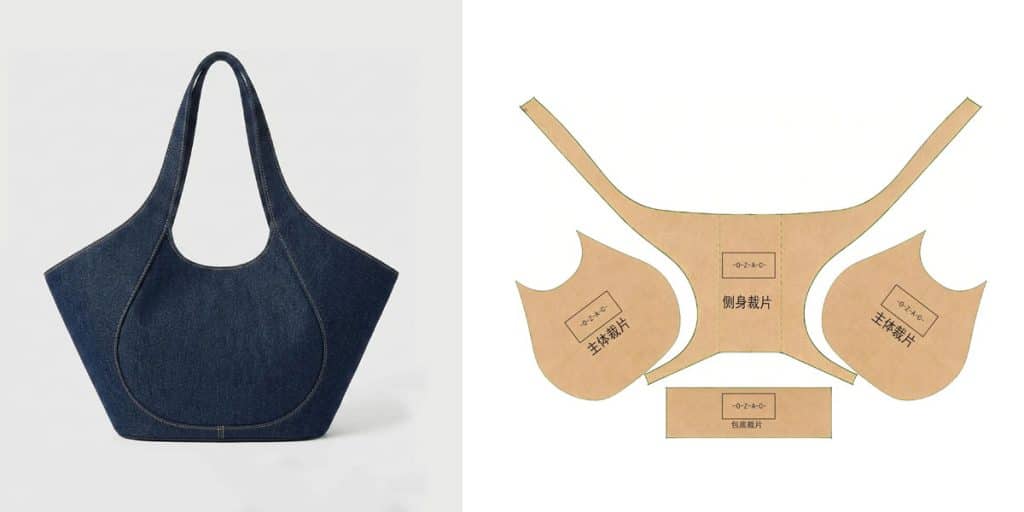
The pattern maker receives a design sketch, tech pack, or CAD drawing. Their job is to translate a 2D image into 3D reality. This means determining exactly how many pieces of material are needed, how each piece must be cut, and how they will be assembled.
Every new design requires a new pattern. A simple tote might need 8 to 12 pattern pieces. A structured bag with multiple compartments can require 30 or more. Each piece must be tested for fit, alignment, and sewing feasibility.
Material Sourcing
Your design specifies certain materials. The sample room must locate them, order small quantities, and have them delivered. Small orders are rarely efficient. Suppliers prefer large production orders. A factory might pay 30-50% more for a few yards of material than they would for a full roll.
If your material is not stocked by the supplier, the factory may need to special order it. That adds lead time and cost. Some materials are not available in small quantities at all.
Hardware Sourcing
This is where many projects encounter delays. Custom hardware—logos, zippers, buckles, rings, clasps—requires molds. A single mold can cost $300 to $1,500. That cost is usually amortized across production orders, but for a sample, someone has to pay for it upfront.
Even standard hardware may have minimum order quantities. A factory cannot always buy just one zipper slider or one buckle. They may have to purchase 500 or 1,000 pieces, which gets factored into the sample fee.
Logo Development
Your brand identity matters. But creating a custom logo for a handbag—whether embossed, debossed, printed, or metal-stamped—requires tooling. Every logo placement needs a die or mold. Those cost money to produce and test.
Construction Planning
Before a single stitch is sewn, someone has to plan the assembly sequence. This is the difference between a bag that looks good and one that holds up after a year of daily use. The construction plan determines:
- Which panels get sewn together first
- Where reinforcement is needed
- How lining is inserted
- Where stress points will develop
- How to maintain shape throughout production
Sample Assembly
Finally, the sample is cut and assembled. This is not a simple task. A skilled sample maker has years of experience. They know how materials stretch, how needles interact with different fabrics, and how to recover from small mistakes.
The sample maker works slower than a production line worker because they are solving problems, not repeating tasks. Every cut and stitch is a test.
Breaking Down the Cost of a Custom Handbag Prototype
Let’s look at where the money actually goes.
Pattern Making
A professional pattern maker charges $30 to $60 per hour. A complex handbag pattern can take 4 to 8 hours to develop. That is $120 to $480 before any material is cut. And that pattern may need adjustments after the first sample.
Materials and Components
Even a small bag uses multiple materials: main body fabric or leather, lining, interlining, reinforcement tape, zipper tape, pull cords, edge paint, and more. Each material has a minimum purchase quantity. For a single sample, a factory might pay for:
- 2 yards of leather at $15 per yard: $30
- 2 yards of lining at $4 per yard: $8
- 1 yard of interlining at $6 per yard: $6
- 1 roll of edge paint: $12
- 1 pack of zipper tape: $18
- 1 pack of thread: $5
The total materials cost for a sample can reach $80 to $200 or more, and the sample maker will rarely use everything ordered. The leftover materials go back to inventory.
Hardware Procurement
Custom hardware is expensive. A metal logo mold costs $400 to $1,200. A custom zipper pull mold costs $300 to $800. Even if the factory does not charge the full mold cost for the sample, they have to cover the tooling expense somehow.
For standard hardware, the factory may purchase a minimum of 500 zipper pulls at $0.25 each: $125. For a sample, they use one.
Skilled Labor
Sample makers are among the most experienced people in any handbag factory. They can earn $20 to $40 per hour. A single sample can take 6 to 12 hours to cut and sew. That is $120 to $480 in labor alone.
And that is only the assembly time. The time spent on pattern development, material preparation, and construction planning is additional.
Sample Room Operations
The sample room is not a factory floor. It is a development lab with specialized equipment, smaller cutting tables, and dedicated sewers. Maintaining that space costs money. Equipment requires maintenance. Materials need to be stored. Quality checks need to be performed.
Those operational costs are spread across every sample produced. The more complex the sample, the more resources it consumes.
Prototype Revisions
Most designs require at least one revision. Often two or three. Each revision means:
- Adjusting the pattern
- Reordering materials
- Re-cutting and sewing
- Re-evaluating construction
A first sample might cost $500. The second revision could cost another $450. The third might be $300. By the time the sample is approved, the total development cost could exceed $1,200 for a single handbag.
Why Complex Designs Cost More to Sample
Not all handbags are created equal. Simple designs cost less to sample. Complex designs cost more. Here is why.
Custom Hardware
Standard hardware is off-the-shelf and readily available. Custom hardware requires molds, tooling, and minimum orders. A simple tote with standard zippers and basic D-rings will cost significantly less to sample than a structured handbag with a custom lock, custom metal corners, and engraved buckles.
Special Materials
Exotic leathers, heavy denims, waterproof coated fabrics, or technical textiles behave differently during sewing. They may require special needles, different thread types, or slower sewing speeds. Some materials need pre-treatment before they can be sewn.
Multiple Compartments
Every compartment means more pattern pieces, more alignment checks, and more assembly steps. A bag with two compartments and a center divider is not twice as hard to sample as a single-compartment bag. It is three to four times harder because of the internal construction complexity.
Complex Stitching
Simple straight stitching is fast and forgiving. Curved stitching, double stitching, decorative stitching, and reinforced stitching all require more time and care. If a design has a complex zigzag pattern or a specific stitch density, the sample maker has to test and adjust settings before sewing.
Premium Finishing
Edge painting, hand-stitched details, rolled edges, bonded seams, and high-gloss finishes require extra steps. Edge paint, for example, must be applied in multiple thin layers with drying time between each. That adds hours to the sample process.
Common Misconceptions About Sample Fees
“Factories make money from samples.”
They do not. Most factories charge sample fees at or below cost, especially for new buyers. The sample is an investment in a potential production order. If a factory could make consistent profit from sampling, they would not need production work. But they do.
The reality is that a well-run sample room loses money on most samples. The fee covers basic costs but rarely yields a profit. The factory’s money is made on production orders, not on prototypes.
“Samples are just mini production runs.”
They are not. Production is about repetition, speed, and efficiency. Sampling is about problem solving, experimentation, and adjustment. A production line can make 100 bags in the time it takes a sample maker to produce one complex prototype. The process is completely different.
“Sample fees should be refundable in every case.”
Refundable sample fees are not always fair to the factory. If a factory spends $800 developing a sample and the buyer decides not to proceed with production, the factory has invested real labor, materials, and time with no return. Some factories offer refunds if the buyer places a production order of a certain size. That is a reasonable compromise. But expecting a full refund on every sample regardless of outcome puts the entire cost burden on the factory, which is not sustainable.
How Professional Sampling Can Save Thousands During Production
We have seen this happen countless times. A client wants to skip sampling or use a very basic prototype to save money. Six months later, they are facing a production crisis.
Here are real examples from our own development work:
Design flaw caught in sampling: A structured backpack design had a zipper that was too short for the opening. In the design drawing, it looked fine. On the sample, the opening barely allowed a tablet to pass through. We adjusted the pattern and added two inches to the zipper. If that issue had reached production, the factory would have had to re-cut 800 panels. That would have cost $4,800 in wasted material alone.
Construction issue caught in sampling: A crossbody bag had a narrow strap attachment point that created a stress concentration. The first sample showed the leather tearing at the attachment after 20 cycles of weight testing. We reinforced the area with a hidden leather patch and changed the stitching pattern. On a production run of 500 units, that one change prevented roughly 150 bags from being returned under warranty.
Material failure caught in sampling: A client specified a lightweight lining fabric that was not suitable for the bag’s structure. The first sample looked beautiful. But after one week of wear testing, the lining had pulled away from the side seams. We switched to a slightly heavier interlined material. The cost difference was $0.80 per bag. If we had used the original material in production, the failure rate would have been high and the brand would have faced significant returns.
Production efficiency improvement: A sample revealed that a particular corner construction method was taking twice as long as estimated. We revised the construction sequence, reducing sewing time by 40 seconds per bag. Over 2,000 units, that was 22 hours of labor saved. The sampling fee paid for itself many times over.
How Brands Can Reduce Sampling Costs
You cannot eliminate sampling fees. But you can control how much you spend.
Provide a complete tech pack
A tech pack with accurate measurements, material specifications, hardware drawings, and construction notes reduces the guesswork. The less time the factory spends figuring out what you want, the lower the sample cost.
Use standard hardware whenever possible
Custom hardware is expensive. If your design can work with off-the-shelf zippers, buckles, and clasps, the sampling cost will be significantly lower. Save custom hardware for the one or two signature elements that truly define your brand.
Limit revisions
Each revision adds cost. The most efficient sampling process is: one sample, one revision, final approval. If you can make clear decisions and provide detailed feedback, you will avoid unnecessary rounds.
Choose production-ready materials
Materials that are readily available in standard widths and quantities are cheaper to sample than obscure or custom-woven materials. If you are unsure, ask the factory which materials they recommend for your design.
Plan for sampling early
Rush orders cost more. If you give the factory two weeks instead of four, they will have to prioritize your sample over other work. That priority often comes with a premium.
How an Experienced Handbag Manufacturer Adds Value During Sampling
A good sample is not just a bag. It is a document of everything learned during development. When a factory has managed hundreds of sampling projects, they bring that experience to every new design.
An experienced manufacturer will:
- Identify potential construction issues before the first cut
- Suggest material alternatives that perform better or cost less
- Recommend pattern adjustments that improve durability
- Flag hardware compatibility problems early
- Build samples that can be used as production references
- Provide detailed feedback on design feasibility
This is not a sales pitch. It is the difference between a sample that looks good and a sample that works. A factory that has seen designs fail in production knows how to prevent that from happening to you.