
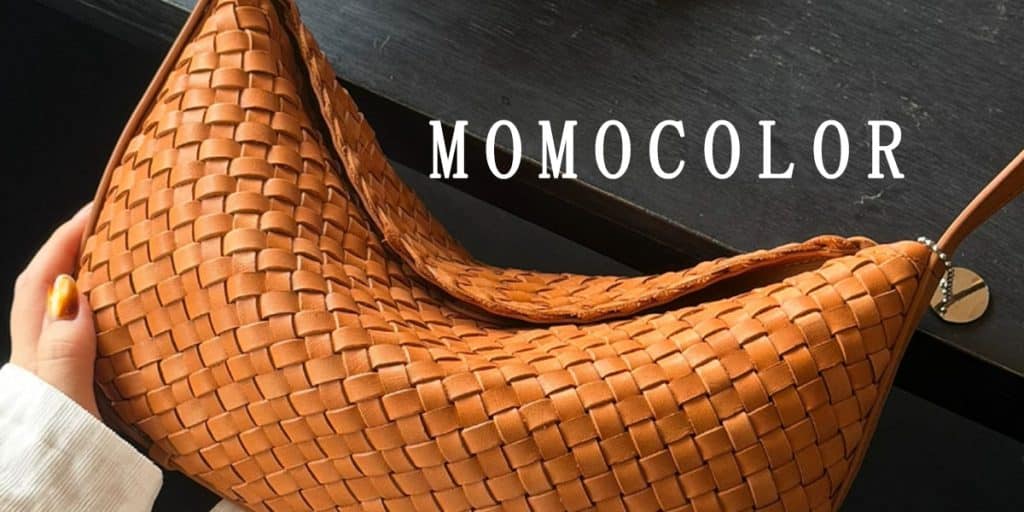
Woven leather bags have quietly become the most talked-about texture in accessories. Open any fashion edit for SS26, and you‘ll find them there — relaxed oversized totes, structured basket shapes, crossbody bags with that unmistakable crosshatched surface that catches light differently depending on the angle. Brands like Bottega Veneta have pushed woven leather firmly back into focus, and the industry has followed. But here’s what most boutique brands and emerging labels don‘t realize: you don’t need a luxury house budget to launch a woven leather collection. The real question is whether your manufacturing partner actually understands the technique — and most don‘t.
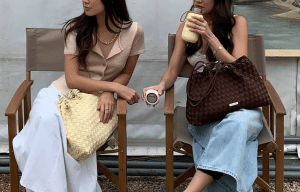
Why Woven Leather Is Dominating the Conversation(If you are not interested, you can skip to the Paragraph 3.)
Woven leather speaks a language that resonates deeply with today’s consumer. It isn‘t loud. It doesn’t rely on hardware or logos to announce itself. The texture does the work — and that‘s exactly what the market wants right now.
Consider the numbers. The global luxury leather goods market is projected to reach over $1 trillion by 2033, growing at a compound annual rate of 6.4%. Handbag buyers are increasingly choosing pieces based on material and make rather than branding. Texture has become the new differentiator in a market saturated with minimal shapes. Woven and intrecciato leather bags, as one editor recently put it, “showcase craftsmanship through construction, offering depth and movement while keeping silhouettes refined and versatile”. Across fashion-forward retailers and private-label launches, woven leather is being called out as the craftsmanship-forward look that bridges opulence and subtlety — a “timeless, textured choice”.
This isn‘t a passing micro-trend. The woven bag category has evolved from summer-only raffia pieces into year-round leather essentials, and buying offices are treating it as a permanent pillar rather than a seasonal bet
Where Intrecciato Comes From — And Why It Matters
The technique most people associate with woven leather has a name: intrecciato. It was introduced in 1975 by Bottega Veneta, born not as a branding exercise but as a practical solution to a genuine production problem.
In the 1960s, the Italian accessories market was dominated by heavy, stiff, structured handbags. When Bottega Veneta’s founders, Michele Taddei and Renzo Zengiaro, set up their leather goods atelier in Vicenza, in Italy‘s Veneto region, they discovered that the sewing machines available locally simply couldn’t stitch through the thick leather hides commonly used at the time. Rather than compromise on materials, the artisans found another way — they cut leather into thin strips called fettucce and wove them into a perforated leather base at a 45-degree diagonal, rather than the standard vertical pattern. Much like cutting fabric on the bias, this created a structure that was simultaneously softer and stronger than anything a sewing machine could produce.
The result was a bag that looked entirely unlike anything else on the market. “The introduction of the Intrecciato gave the bags a fluidity, almost like a fabric,” explains Barbara Zanin, Bottega Veneta’s Director of Craft and Heritage. The weave became so distinctive that the house famously ran advertising declaring: “People know a Bottega the minute they see one. So we put our name on the inside only”. When Lauren Hutton carried an oxblood intrecciato clutch in the 1980 film American Gigolo, the look became permanently lodged in fashion’s collective memory.
Fast forward to 2025. Bottega Veneta marked the 50th anniversary of intrecciato with a major campaign titled “Craft Is Our Language,” featuring cultural figures like Julianne Moore, Zadie Smith, and Lauren Hutton herself. The house has also launched Accademia Labor et Ingenium, a dedicated school training 50 students a year in the technique, with guaranteed employment upon completion — a clear statement that the craft isn‘t just being preserved, but actively scaled for the next generation. This kind of institutional investment signals something important: woven leather isn’t heritage on life support; it‘s a category in growth.
The Production Reality Most Brands Don’t Understand
Here‘s where the conversation shifts from “appreciation” to “execution.”
Most factories will tell you they can do woven leather. Very few mean it the way you need them to mean it. Making a woven leather bag at commercial scale involves decisions that go far beyond whether someone can thread leather strips together. Let’s walk through the production logic so you can have a more informed conversation with any potential supplier.
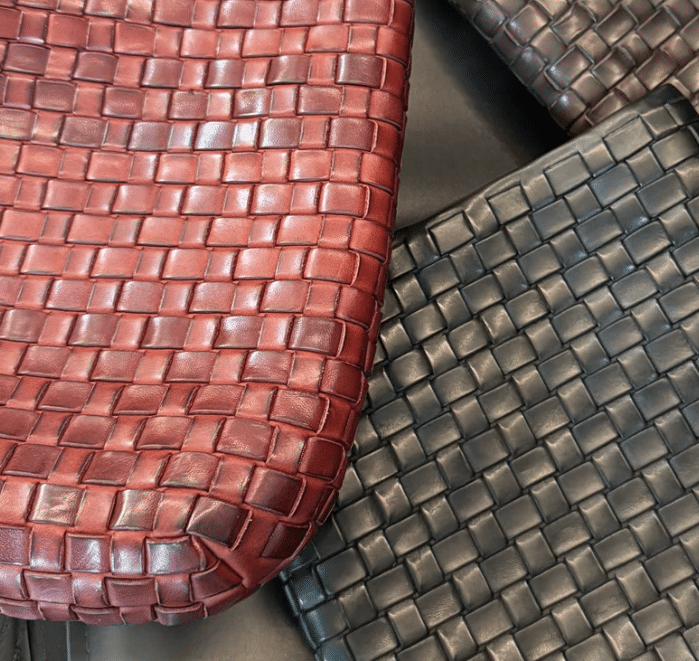
Panel-based construction vs. fully interwoven body. There are two fundamental approaches. In panel-based construction, woven leather panels are attached to a supporting underlayment — this improves stability, makes cost control far more predictable, and works well for structured silhouettes like totes and satchels. In fully interwoven construction, the entire bag body is built from interlocking leather strips without a rigid backing. This creates much deeper texture and a stronger artisanal character, but it demands significantly more labor input and tighter workmanship control. From a commercial standpoint, panel-based construction supports higher consistency and more predictable pricing; fully interwoven construction enhances premium perception. The right approach depends entirely on your brand positioning and target retail price.
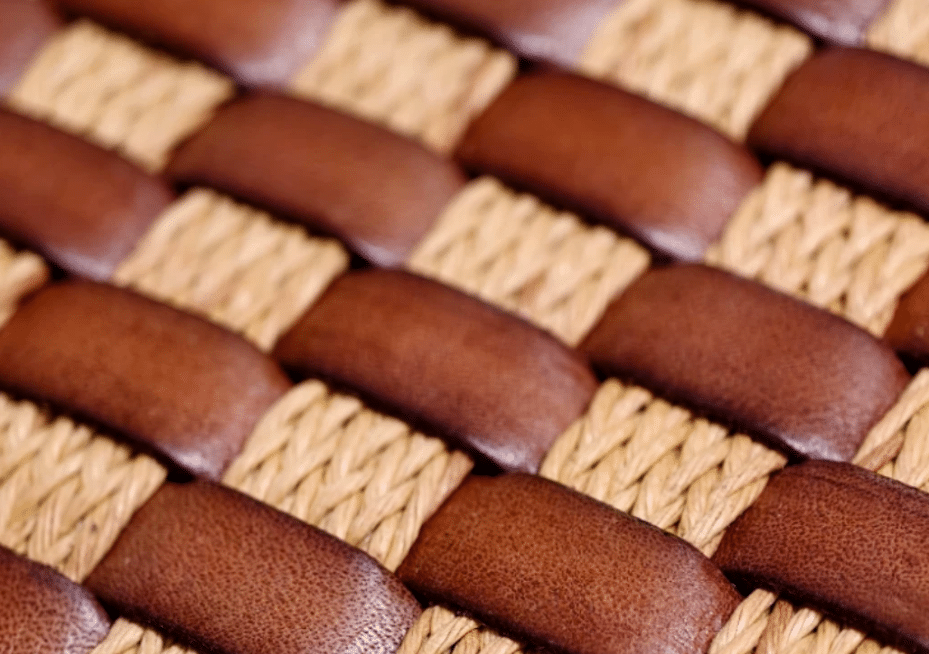
Strip uniformity is everything. If you‘ve ever seen a woven bag that looks slightly “off,” the problem is almost always inconsistent strip width. Commercial-grade woven leather requires strips cut to precise, repeatable tolerances — not just uniform within a single bag, but uniform across an entire production run. This is one of the first things to check in a pre-production sample.
Weave density and tension control. Too loose, and the bag will sag within a season. Too tight, and the leather loses its flexibility, making the bag feel stiff and uninviting. Skilled production teams know how to calibrate tension based on the temper of the specific leather hide being used, and they build this into written specifications that can be replicated across multiple production cycles.
Material consumption is higher than standard bags — much higher. Because the leather needs to be cut into strips rather than large panels, and because weaving inherently creates more offcut waste than panel construction, the same bag silhouette will consume roughly twice the raw leather when executed in woven construction. This has obvious implications for costing, and it’s why many factories quote numbers that seem impossibly low — they‘re either using inferior materials or they haven’t accurately accounted for the yield loss.
Finishing details that separate quality from compromise. In a woven bag, edge finishing becomes exponentially more complex — you‘re dealing with dozens or hundreds of strip ends rather than a handful of panel edges. Quality work means clean, sealed edges that won’t fray over time, and consistent application of edge paint or burnishing across every single strip end. This is slow work. It cannot be fully automated. And it‘s the single biggest tell of whether a factory takes woven leather seriously or treats it as an afterthought.
The Cost Gap: Why Europe Charges What It Charges — And What’s Actually Possible
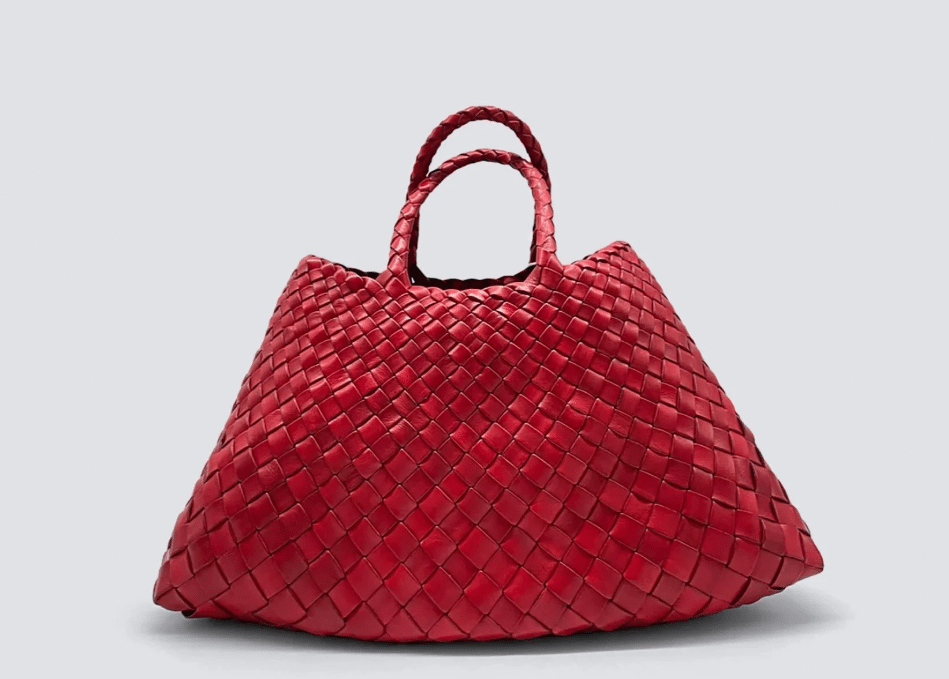
If you‘ve sourced woven leather bags from Italian or French ateliers, you already know the numbers. Prices at the wholesale level frequently start at several hundred euros per unit and climb quickly from there. There are legitimate reasons for this — European labor costs, smaller-batch material procurement, and the genuine scarcity of artisans trained in the technique.
But there’s a structural reason the gap is as wide as it is, and it has nothing to do with craft quality. In Italy‘s Veneto region, where intrecciato was born, the entire production ecosystem is built around low-volume, high-margin luxury — small workshops, artisanal guilds, supply chains optimized for batch sizes in the dozens, not the hundreds. The cost structure is baked into the system at every level.
In southern China’s leather goods manufacturing clusters — particularly in cities like Guangzhou, where the industry is vertically integrated — raw materials, weaving facilities, dyeing units, and finishing workshops operate within tight geographic proximity. This integration reduces lead times and enables rapid prototyping in ways that fragmented European supply chains simply can‘t match. When a woven leather production line is built around controlled specifications, repeatable workmanship standards, and export-oriented quality control, the result is a product that achieves genuine premium character at costs that make commercial sense for emerging and mid-market brands — often 50-70% below what a European atelier would quote for comparable work.
The key distinction to understand: you’re not trading away craftsmanship for cost savings. You‘re accessing a production model that has been engineered differently — one that supports handwoven and machine-assisted woven constructions at volumes and price points that fit brand-building budgets rather than heritage-luxury economics.
What to Look for in a Woven Leather Manufacturing Partner
Before you start sampling, here are the signals that separate a capable woven leather supplier from one that will deliver headaches:
First, ask to see actual production samples — not just showroom prototypes. A workshop can spend three days making a single beautiful piece. That tells you nothing about their ability to produce 300 units with consistent quality. A supplier who takes woven leather seriously should be able to show you production-run samples, with visible repeat consistency across multiple pieces. Production photos at key stages — pre-production, mid-line, and pre-shipment — should be standard procedure.
Second, understand how they manage leather thickness and temper. Woven construction requires leather with specific characteristics — supple enough to weave without cracking, substantial enough to hold its shape. Full-grain and top-grain leathers are standard for quality work, but the temper (the leather‘s firmness and flexibility) matters just as much as the grade. A knowledgeable partner will guide you toward materials suited for woven production, not just offer you whatever they have in stock.
Third, get clarity on MOQ structure early. Woven bags sit at an interesting point in the market. For fully custom designs with specific weaving patterns, minimum order quantities may need to reach certain thresholds for commercial viability. But many suppliers now offer flexible MOQ structures — samples at 1-2 pieces, smaller initial batches for market testing, and scaling from there. The right partner will work with you on staged scaling rather than demanding full production commitment upfront. Note, however, that because woven leather involves specialized setup, the MOQ for a custom weave pattern will almost always be higher than what you’d expect for a standard panel-construction bag.
Finally, pay attention to edge finishing. Request close-up photos of how the supplier handles strip ends. If edges look frayed, uneven, or hastily painted, keep looking. This is one area where the difference between a factory that owns the technique and one that merely claims it becomes immediately visible.
How to Get Started: A Practical Sequence
If you‘re considering woven leather for an upcoming collection, here’s a sequence that works:
Start with a design conversation, not a purchase order. Share your reference images, sketches, or concept direction. A capable partner will ask questions about structure, intended use, and retail positioning — not just quote a price. The goal at this stage is to understand which construction method (panel-based or fully interwoven) suits your brand‘s aesthetic and price architecture.
Invest in sampling early. Expect 14-21 working days for the first sample after specifications are confirmed. This is not a cost-cutting step — it’s where you validate strip width consistency, weave density, color accuracy, and hardware finish before committing to bulk production. Color matching should use Pantone references confirmed during the sampling phase, with specifications locked for leather, lining, edge paint, and stitching.
Plan realistic production timelines. Bulk production for woven leather bags typically requires 45-60 days after sample approval, depending on construction complexity and order volume. This is longer than what you‘d expect for a standard panel bag. Build this into your seasonal calendar; woven leather doesn’t accommodate last-minute sprints.
Start with a focused capsule, not a full collection. A tightly curated range — perhaps two silhouettes in two to three colorways each — lets you test market response, refine quality specifications, and build a relationship with your manufacturing partner without overcommitting. Once you‘ve validated that the product resonates with your buyers, you can expand into broader woven styles.
The Bottom Line
Woven leather is having a moment that looks increasingly permanent. The brands that move now — that invest in understanding the technique, build capable supplier relationships, and bring woven bags to market at accessible price points — will own a category that luxury houses have spent decades educating consumers to desire. The technique has already been proven on runways and magazine covers. The question isn’t whether the market wants woven leather. It‘s who’s going to make it available beyond the top-end price tier.
If you want to discuss what a woven leather collection could look like for your brand — construction methods, material options, realistic MOQs, and timeline planning — (momocolor bag manufacturer)we‘re ready to have that conversation. Our production team works with both handwoven and machine-assisted woven construction, and our sampling process is built around commercial feasibility, not just one-off prototypes. Send us your ideas. Let’s figure out what‘s possible.